

adversiment
80% of students see big gains in retention by switching to active recall and spaced practice. This is what the Association for Psychological Science found.
This guide offers practical, science-backed study techniques. They help improve learning skills and boost grades. Research by Roediger and Karpicke shows that spaced repetition and active recall beat passive rereading for better memory.
Effective study methods save time and help you learn more deeply. They are great for high school students, adult learners, or anyone who loves to learn. These strategies make studying more efficient and less stressful.
To use this guide, start by figuring out how you learn best. Then, make a study plan that works for you. Use active learning techniques and take breaks to stay focused. You’ll also learn how to use technology, take better notes, and stay motivated.
By the end, you’ll know how to use study techniques that really work. You’ll improve your learning skills and boost your grades with science-backed habits.
Understanding Your Learning Style
Knowing how you learn best helps you pick the right study methods. Learning styles are a guide, not a rule. They help you mix and match to keep learning fun and effective.
Visual Learning
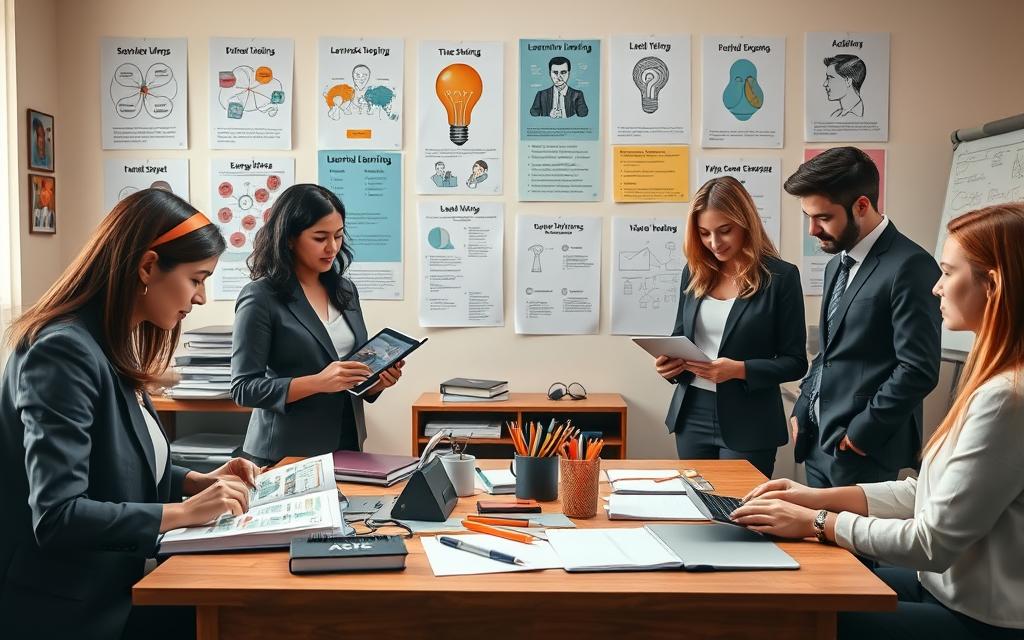
Visual learners love diagrams, charts, and colors. They remember images and layouts better than text. Try making concept maps, flowcharts, and annotating images to make ideas visual.
Use Canva for clear study visuals and Microsoft OneNote for sketching notes. Watch Khan Academy videos with captions for complex topics. Visual aids help remember material with clear structure or relationships.
Auditory Learning
Auditory learners do well with lectures and discussions. They remember rhythm, tone, and spoken words. Record lectures and replay them, or read notes aloud to help remember.
Try voice memos, Audible for textbooks, and lecture capture in Zoom or Canvas. Add mnemonic songs or jingles and join study groups for active learning. Pair listening with active testing to improve retention.
Kinesthetic Learning
Kinesthetic learners learn by doing and moving. Hands-on activities help them connect concepts to action. Labs, role-play, and teaching at a whiteboard make abstract ideas real.
Use PhET simulations, lab kits, and interactive apps for real-world tasks. Physical flashcards and standing while writing help muscle memory. Mix kinesthetic activities with spaced and retrieval practice for lasting benefits.
Quick self-check: Do you prefer diagrams, listening, or doing? Which study tips and tricks feel natural? Which sessions leave you confident the next day?
Best study techniques mix different ways of learning. Use visual tools for structure, auditory methods for review, and kinesthetic drills for application. This way, you truly improve your learning skills.
| Learning Mode | Key Traits | Top Techniques | Useful Tools |
|---|---|---|---|
| Visual | Prefers images, colors, spatial layout | Concept maps, color-coded notes, video captions | Canva, Microsoft OneNote, Khan Academy |
| Auditory | Remembers lectures, benefits from discussion | Record/replay lectures, read aloud, mnemonic songs | Voice Memos, Audible, Zoom/Canvas lecture capture |
| Kinesthetic | Learns by doing, likes movement and hands-on tasks | Lab practice, physical flashcards, role-play | PhET simulations, lab kits, interactive apps |
The Importance of a Study Schedule
Having a steady study schedule helps you avoid procrastination and keeps you moving forward. By matching study times with deadlines and exam dates, you spend less time rushing and more time learning. Small, consistent habits help you develop lasting study habits for the semester.
Setting Realistic Goals
Use SMART goals to make your targets clear and achievable. For example, aim to finish two problem sets and review lecture notes for 60 minutes.
Break down big projects into smaller tasks. Use apps like Toggl or RescueTime to estimate time. Focus on the most important tasks first. These steps help you use effective study methods and avoid feeling overwhelmed.
Daily vs. Weekly Planning
Daily planning helps you stay on track with specific tasks. A short plan lets you complete tasks and feel a sense of progress each day. Try one focused 90-minute block split into Pomodoro intervals.
Weekly planning helps you organize larger study blocks and balance subjects. Schedule a weekly review session to revisit older material. Weekly checks help you maximize study efficiency over time.
Use tools like Google Calendar, Notion, Trello, or a physical planner to color-code subjects and set reminders. Printable templates are helpful when you need a simple, visible plan on your desk.
To keep a schedule, build habit cues like a fixed time and place. Add accountability partners and buffer time for surprises. Realistic plans support motivation and help you cultivate better study habits while pursuing academic goals.
Active Learning Techniques
Active learning makes you dive into material by analyzing, synthesizing, and applying it. It’s better than just reading passively if you want to learn and remember better. Use short, focused sessions and practical methods to make studying more effective.
Summarization
Summarizing captures the main points, evidence, and implications in your words. Try a one-paragraph summary for a chapter or a one-sentence summary for each paragraph in an article. Speaking your summaries out loud or teaching them to someone else helps you remember better.
Use tools like Microsoft Word or Google Docs to organize your notes. Create headings, bullet points, and collapsible sections. This turns long texts into compact, easy-to-review study tips and tricks.
Questioning
Ask questions that dig deep: Why did this happen? How does it relate to other concepts? What if things change? Bloom’s Taxonomy helps you create questions from remember to create.
Turn headings into questions, make quick quizzes, and use Socratic questioning while reading. This boosts critical thinking and supports practice testing, improving your learning skills.
Combine summarizing with questioning for active practice. Write a brief summary, then make five to ten questions about it. Answer them without notes to practice recalling and find out what you don’t know.
| Technique | What to Do | Why It Works | Tools |
|---|---|---|---|
| One-paragraph summary | Condense chapter into one paragraph with main idea and evidence | Forces selection of core information, improving encoding | Google Docs, Word |
| One-sentence-per-paragraph | Create one sentence that captures each paragraph’s point | Breaks material into bite-size concepts for review | Notion, Word |
| Teach-aloud | Explain topic aloud to an imagined listener | Self-explanation strengthens connections and retention | Voice recorder, phone |
| Socratic questioning | Probe assumptions, evidence, implications with “why” and “how” | Deepens understanding and uncovers hidden gaps | Notebook, flashcards |
| Self-quiz | Turn headings into questions and answer without notes | Practice retrieval boosts long-term memory | Anki, paper flashcards |
The Power of Breaks
Short pauses are not wasted minutes. They refresh your focus, reduce mental tiredness, and help solidify new knowledge. Taking thoughtful breaks can improve your grades by keeping your mind sharp and memory strong.
Pomodoro Technique
The Pomodoro technique involves timed work and breaks. It’s common to work for 25 minutes, then take a 5-minute break. After four cycles, take a longer break of 15–30 minutes.
Other patterns like 50/10 or 90/20 work for different needs. Apps like Forest, Focus@Will, TomatoTimer, or a simple timer help track your progress. This method boosts your study efficiency by setting clear goals and tracking your progress.
Importance of Downtime
Sleep and longer breaks are key for memory. Most students need 7–9 hours of sleep to retain information and recover. Short breaks should include light exercise, drinking water, or a quick walk to stay alert.
Stay away from screens during breaks. Instead, choose activities that relax your mind and spark creativity. Proper use of downtime can enhance your academic performance by improving focus, creativity, and long-term memory.
Practical tips: plan your breaks, choose active breaks for better alertness, and watch for signs of fatigue. Regular, small breaks with focused work maximize your study efficiency over long periods.
Utilizing Technology Effectively
Technology can help you stay focused if used wisely. Choose tools that help you achieve your goals and follow a routine. Apps and platforms should support your study habits, not replace them.
Small habits, like setting app limits and turning off notifications, can make a big difference. They help you improve your learning skills over time.
Educational Apps and Tools
Find apps that fit your study needs. Anki is great for memorizing with spaced repetition, perfect for exam prep. Quizlet is good for quick flashcard reviews and quizzes.
Notion is perfect for planning and organizing your studies. Evernote helps you keep notes across devices. Grammarly makes editing faster and writing clearer.
Khan Academy and Coursera offer structured lessons for extra study. WolframAlpha solves technical problems and explains how to solve them. Forest and Cold Turkey help you stay focused by blocking distractions.
Many educational apps have free versions. University subscriptions often give you access to premium features for free. Use each tool for a specific task: Anki for retention, Notion for planning, Coursera for deep reviews.
Online Study Groups
Working with peers can make studying more fun and help you learn from others. Online study groups are great for short, focused sessions. Platforms like Discord have study servers with topic channels.
Use Zoom or Google Meet for live sessions and Slack for Q&A. University study portals connect you with classmates and course resources. Keep groups small, with three to six members, to ensure everyone contributes.
Set clear agendas and assign roles. This includes a facilitator, a note-taker, and a problem-owner. Combine live meetings with shared Google Docs for follow-up.
To avoid tech distractions, block notifications and set app limits. Turn off browser tabs that aren’t relevant. Keep your digital space clean by clearing clutter and reviewing notes weekly.
| Tool | Primary Strength | Best Use Case |
|---|---|---|
| Anki | Spaced repetition | Memorization for exams and vocabulary |
| Quizlet | Flashcards and quick quizzes | Rapid review and group practice |
| Notion | Flexible organization | Long-term study planning and project tracking |
| Evernote | Note capture across devices | Research and clipped resources |
| Grammarly | Writing clarity | Editing essays and reports |
| Khan Academy | Free structured lessons | Supplemental learning and concept review |
| Coursera | In-depth courses | Deep topical review and certifications |
| WolframAlpha | Problem solving and step-by-step help | Math, science, and technical queries |
| Forest | Focus through gamified timers | Protecting study sessions from distraction |
| Cold Turkey | Site and app blocking | Enforcing distraction-free work periods |
Note-Taking Strategies
Good notes make lectures and readings useful for studying. They help you review faster and practice recalling information. Use clear layouts, consistent headings, and brief summaries to make information useful later.
The Cornell method helps organize messy lectures. Divide your page into a narrow left cue column, a wider right note-taking column, and a summary area at the bottom. Write main notes in the right column during class. After class, add cues or questions in the left column and a two- to three-sentence summary below.
Use the Cornell method for retrieval practice by covering the note column and using cues to recall facts. Review your notes at 24 hours, one week, and one month to lock material into long-term memory with spaced repetition.
Handwritten notes help many students focus and retain concepts. Writing by hand slows you down enough to synthesize ideas and reduces digital distractions. Paper notebooks work well for problem-solving, diagrams, and subjects that need quick sketches.
Digital notes offer powerful organization and searchability. Tools like GoodNotes and Notability work on tablets for handwriting that syncs, while Microsoft OneNote and Evernote provide cross-device access and easy tagging. Digital notes let you add images, audio, and linked resources.
A hybrid workflow gives the best of both worlds. Take handwritten notes during lectures to enhance retention. Later, transcribe key points into digital notes to create searchable summaries and backup copies. Convert those summaries into flashcards or practice questions for active review.
Keep practical habits to make notes usable. Add headings and timestamps. Highlight formulas and definitions. Create a master index or tag system in your digital tool to find topics fast. Turn key points into spaced-repetition flashcards.
| Aspect | Handwritten Notes | Digital Notes | Best Use |
|---|---|---|---|
| Retention | High for many learners due to kinesthetic encoding | Good if actively reviewed and synthesized | Lecture comprehension and concept mapping |
| Organization | Manual index or tabs needed | Search, tags, folders, cloud backup | Long-term study collections and cross-course research |
| Multimedia | Limited to sketches and pasted prints | Supports images, audio, links, and videos | Subjects needing recordings or diagrams |
| Speed | May be slower; forces synthesis | Fast typing and copy-paste | Rapid note capture and transcribing lectures |
| Tools | Paper notebooks, pens, highlighters | GoodNotes, Notability, OneNote, Evernote | Hybrid workflows and backups |
Practice Testing for Retention
Active recall is key to long-term learning. It makes knowledge stick by forcing you to recall it. Regular quizzes and reviews help solidify facts and concepts.
Flashcards
Flashcards should be simple. Each card should have one piece of information. Adding images or mnemonics can help remember better.
For those who learn by doing, physical flashcards work well. Try spaced repetition systems like Anki. They help you remember by reviewing at the right time.
Practice Exams
Practice exams help you get used to the test format. They reduce anxiety. Use real exams and practice tests to get better.
Review what you got wrong after each exam. Identify what you need to work on. Focus on those areas in your next practice session.
Make practice a regular part of your study routine. Use low-stakes quizzes and spaced practice. This keeps your knowledge fresh and helps you retain information better.
| Tool | Best Use | Strength | How to Apply |
|---|---|---|---|
| Anki | Spaced repetition flashcards | Automated review scheduling | Create one-concept cards; use cloze deletions and images; study daily |
| Physical Index Cards | Hands-on flashcard practice | Kinesthetic engagement | Shuffle, sort into piles by difficulty, test aloud |
| College Board Practice Tests | Official exam simulation | Realistic timing and format | Take full timed tests; review errors by type |
| UWorld | Subject-specific question banks | High-quality, explanatory answers | Do timed blocks; read explanations; log error patterns |
| Textbook Chapter Tests | Concept reinforcement | Aligned with course material | Use for weekly cumulative practice; focus on weak chapters |
Creating a Study-Friendly Environment
A clean study area helps your brain focus better. Making small changes to your space can make a big difference. Here are tips to reduce distractions and organize your study area for better efficiency.
Minimizing Distractions
First, list what distracts you: phone alerts, social media, noisy roommates, and clutter. Turn on Do Not Disturb or Focus Mode on your phone. Use Freedom or Cold Turkey to block websites during study time.
Choose the right place to study based on the task. A quiet library is best for deep work. A café is good for light tasks or note-taking. Use headphones or a white noise app for background noise.
Set clear study hours at home. Tell others when you need quiet time. Turn off notifications and hide your phone to avoid distractions.
Organizing Your Space
Good ergonomics is key. Choose a comfy chair and set your monitor right to avoid eye strain. Good lighting keeps you alert and focused. Keep your desk clean to avoid visual distractions.
Have a dedicated study area if you can. It tells your brain it’s time to focus. Keep water and healthy snacks nearby. Use a calendar and a short to-do list to stay focused.
Simple weekly routines help keep your space organized. Clean your desk weekly. Plan your study sessions and gather materials ahead of time. These habits save time and boost study efficiency.
Digital Organization
Organize your digital files with clear folders and names. Back up important documents online. Clean your bookmarks monthly to avoid digital clutter.
Use a simple file naming system like Course_Date_Topic. Use tags or folders in your note apps to match your physical notebooks. Digital organization saves time and helps you stay organized mentally and physically.
- Declutter desk weekly
- Set phone to Focus Mode for study blocks
- Use website blockers for deep sessions
- Keep ergonomic setup and good lighting
- Back up files to Google Drive or Dropbox
Collaborative Learning
Studying with others can make learning more enjoyable. It combines explanations, feedback, and different views to help understand better. Use short agendas and tasks to keep the focus on practice.
Group study offers many benefits. You get to see different ways to solve problems, stay accountable, and share resources. Aim for groups of three to six with diverse skills and commitment.
Make sure sessions have a clear plan, timed practice, and short breaks. This keeps everyone on track and focused.
Group Study Benefits
Diverse explanations help you see things from different angles. Small groups let everyone participate and learn from each other. Use a checklist before meetings to stay organized.
Set rules to keep everyone engaged. Assign tasks like solving problems together and taking notes. Prepare beforehand to make the most of your time.
Peer Teaching
Peer teaching makes learning more effective. When you teach, you clarify your own understanding and find knowledge gaps. Try short sessions where each person explains a topic for 10–15 minutes.
Rotate tutors weekly to share the responsibility. Use peer review for exams or essays. Campus programs like learning centers and Supplemental Instruction support peer tutoring.
Document notes after each session. This helps everyone review and learn more. Research shows teaching strengthens your own understanding, making peer teaching a key strategy.
Staying Motivated While Studying
Keeping study motivation steady takes small, intentional steps. Short rewards, clear goals, and a calm routine can prevent burnout. They help students cultivate better study habits that last through a semester.
Positive Reinforcement
Use immediate rewards after a study session to reinforce good habits. A five-minute walk, a favorite snack, or an episode of a show can mark small wins. Larger rewards for bigger goals might be a dinner out or a new book.
Try habit-tracking apps like Streaks or HabitBull, or a simple paper chart to visualize progress. Visual feedback taps into positive reinforcement and makes effort feel visible.
Connect tasks to personal aims such as career steps or mastery of a subject. Intrinsic interest in learning keeps motivation stronger than rewards alone. It helps boost academic performance over time.
Setting Milestones
Break semester goals into bite-size milestones: unit mastery, midterm readiness, and a final cumulative review. Apply SMART criteria so each milestone is specific and checkable.
Schedule interim check-ins to assess progress. Public commitments to a study group or an accountability partner make pre-commitment work. This reduces procrastination and helps cultivate better study habits.
When setbacks occur, normalize them and reflect on causes like poor scheduling or unrealistic targets. Adjust plans, take restorative breaks, and prioritize sleep or social support to regain momentum.
Mental health matters for sustained motivation. Use campus counseling when needed, try mindfulness apps like Headspace or Calm, and practice simple breathing exercises. These help restore focus and improve the chances to boost academic performance.
Learning Beyond the Classroom
Learning habits can last a lifetime, not just for exams. Use the methods you learn in class for work and personal projects. This approach boosts your learning skills and keeps your mind sharp.
Real-World Applications
Apply what you learn to real projects, internships, or volunteer work. For instance, coding students work on open-source projects. Business students analyze case studies or intern at startups. Language learners find conversation partners through Meetup or Tandem.
These experiences build skills you can use anywhere. They make complex ideas easier to understand.
Lifelong Learning Strategies
Start small with habits like regular reading and microlearning. Take courses on Coursera, edX, or LinkedIn Learning. Use spaced repetition and retrieval practice to keep skills sharp.
Keep a learning journal and set yearly goals. This helps you track your progress and see what works best.
Surround yourself with mentors, industry events, and online communities. Stay curious and document your learning in a portfolio or blog. This turns studying into a path for career growth and ongoing learning.