

adversiment
Americans spend over seven hours a day on screens. Much of this time is valuable in the attention economy.
Herbert A. Simon said decades ago that attention is rare. Today, his idea powers billion-dollar businesses. Economists like Michael Goldhaber and Timothy Wu have shown how online attention is turned into valuable things like clicks and views.
Smartphones and social platforms have made constant distractions a norm. Companies like Meta, Google, and TikTok fight for your attention. Advertisers and creators make money from every second you watch or click.
In the U.S., the battle for attention impacts our work, mental health, privacy, and business success. Digital distractions harm our focus and well-being. But, managing our attention well can give us back control and value.
This article will guide you through the attention economy. We’ll discuss how marketers measure and buy attention, platform strategies, and what grabs our attention. We’ll also look at the financial and ethical implications. You’ll learn how to manage your attention better and how creators can compete without losing quality.
Understanding the Attention Economy
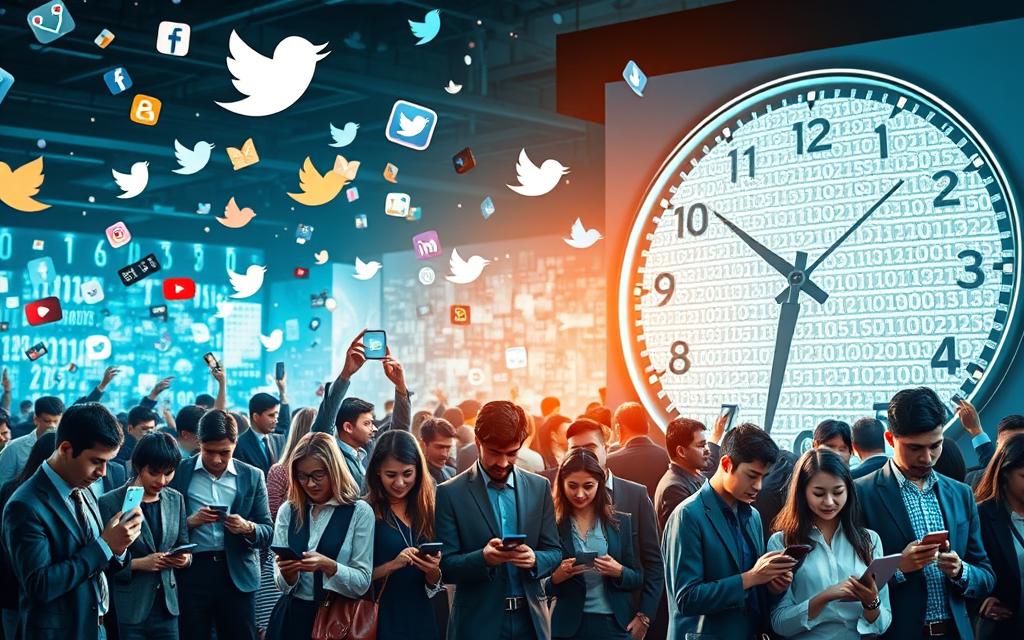
The digital world sees attention as a rare resource. Everyone from brands to creators fights for our time. This fight shapes what we see and hear online.
Definition of the Attention Economy
The attention economy is a system where attention is a limited resource. Actors compete to capture and use it. Metrics like impressions and time-on-site help measure success.
These metrics guide how content and ads are placed. Good management turns brief moments into valuable data for advertisers and publishers.
Historical Context and Evolution
Herbert A. Simon first noted attention’s scarcity in 1971. The concept grew as mass media expanded. Cable TV and hundreds of channels later intensified the competition.
The internet changed business models to focus on ads and attention. Google’s search ads and Facebook’s News Feed led the way. YouTube and TikTok optimized for engagement and short videos.
Measuring attention has also evolved. Nielsen and Comscore were early trackers. Now, Google Analytics and Meta Insights offer detailed insights for better content and ads.
Key Players in the Attention Economy
Big platforms like Google, Meta, TikTok, YouTube, and X aim to keep us engaged. Advertisers and ad networks pay for our attention. Publishers and creators produce content to attract us.
Programmatic adtech firms match ads with audiences in real time. Measurement companies help marketers refine their strategies. As information and cognitive overload grow, winning our attention becomes harder. Platforms and brands use precision targeting to cut through the noise.
The Importance of Attention in Digital Marketing
The attention economy has changed how brands plan their campaigns. Marketers now aim to grab brief moments of focus to prompt action. This shift emphasizes the need for relevance, speed, and emotional clarity in their work.
Advertising strategies have been impacted by this change. Native ads, influencer partnerships, and storytelling are now key. These tactics aim to blend seamlessly with the user’s experience. Gone are the days of one-size-fits-all ads; now, there’s a focus on creating performance creative that tests various approaches.
Programmatic buys and targeted placements have become the norm for many brands. They use first-party data to send personalized messages on a large scale. This method boosts social media engagement and reduces wasted impressions.
Measuring engagement and ROI involves a range of metrics. Key performance indicators (KPIs) include click-through rate (CTR), conversion rate, cost per acquisition (CPA), return on ad spend (ROAS), time on site, bounce rate, and lifetime value (LTV).
Analytics tools like Google Ads and Facebook Ads Manager provide quantitative data. Marketers also use surveys, focus groups, and brand lift studies to gather qualitative insights. Attribution models must account for both immediate conversions and long-term brand effects.
Case studies highlight the success of attention-driven tactics. Nike used cinematic storytelling and athlete-focused narratives to increase brand lift and purchase intent. Dollar Shave Club launched with a bold video that generated massive awareness and subscriptions.
Chipotle focused on short-form TikTok campaigns and creator partnerships. Trend-based content boosted foot traffic and digital orders during campaign peaks. Each example shows that platform-native creative outperforms repurposed ads.
Lessons learned from these campaigns are clear.
- Creative hooks matter: strong openings capture the first seconds of attention.
- Platform-native content wins: formats built for the channel outperform reshared assets.
- Measure broadly: include brand and direct-response metrics when measuring engagement.
| Campaign | Primary Tactic | Key Metrics | Notable Outcome |
|---|---|---|---|
| Nike | Story-driven video and athlete partnerships | Brand lift, purchase intent, social media engagement | Improved brand perception and higher conversion rates |
| Dollar Shave Club | Viral launch video with direct CTA | Awareness, subscriptions, CPA | Rapid subscriber growth from a single creative asset |
| Chipotle | Short-form TikTok trends and influencer collaborations | Foot traffic, digital sales, engagement rate | Increased store visits and online orders tied to campaign spikes |
How Social Media Platforms Compete for Attention
Platforms compete for our attention by using design, data, and science. They adjust feeds and alerts to keep us coming back. This competition shapes what we see and how creators engage with us.
Algorithms rank content to show us what’s most likely to grab our attention. TikTok’s For You Page uses short and long-term signals to guess how long we’ll watch. Facebook looks at likes, comments, and who posted to figure out relevance. YouTube focuses on watch time and how long we stay to keep us watching.
Signals include likes and shares, and even how fast we watch videos. Things like thumbnails and captions also play a role. Platforms mix these signals into scores to decide what we see.
Push notifications and alerts try to pull us back in. Instagram sends story nudges, YouTube updates us on new videos, and X shows trending topics. They test different messages and times to get us to click and stay.
When is the best time to send notifications? Morning and evening are often the best. Platforms space out notifications to avoid overwhelming us. Email summaries also help keep us engaged with brands and creators.
Viral content spreads fast when sharing and algorithms work together. TikTok’s hashtag challenges, trending songs, and repeatable formats can quickly get a creator noticed. Viral hits can bring a huge spike in engagement, much more than steady growth.
But rapid spread can also spread harm. Memes and trends can carry misinformation. Platforms must balance promoting content with moderation to avoid harm while keeping creativity alive.
Features that keep us engaged make the competition fiercer. Infinite scroll, autoplay, and short-form videos are designed to keep us watching. This design pushes creators to make content that fits these formats.
| Mechanic | How It Drives Attention | Platform Examples |
|---|---|---|
| Algorithmic Ranking | Surfaces high-probability content to increase watch time and interactions | TikTok For You Page, Facebook News Feed, YouTube Home |
| Notifications | Re-engages users to boost session frequency and reopen rate | Instagram push alerts, YouTube new video alerts, X trending notifications |
| Short-Form Loops | Encourages repeat views and rapid consumption | Reels, TikTok, YouTube Shorts |
| Autoplay & Infinite Scroll | Reduces friction between items, increasing time-on-platform | Facebook, Instagram, TikTok feeds |
| Viral Formats | Amplifies reach through shares and trends, creating exponential attention spikes | TikTok challenges, viral songs on Spotify/YouTube, trending hashtags on X |
The Psychology Behind Attention Grabbing
Grabbing attention online taps into basic human limits and instincts. Simple design and clear choices reduce friction. Strong feelings steer memory and sharing. Urgency can prompt immediate action. These forces shape how users behave on platforms and how brands craft messages.
Cognitive Load and Decision Fatigue
Human working memory has limits. Miller’s Law suggests about seven items plus or minus two. But modern studies show effective attention is lower when multitasking. Too many options cause cognitive overload and raise decision fatigue.
When people face decision fatigue, they default to fast habits like endless scrolling or quick reactions. Designers who simplify choices reduce friction. This helps users act with confidence instead of freezing or abandoning a task.
Emotional Triggers in Content
Content that sparks surprise, amusement, anger, awe, or curiosity gets more clicks and shares. Emotions boost memory consolidation, so readers recall emotionally charged posts longer than neutral ones.
Creators should build hooks that tap emotional triggers while staying honest. A vivid story, a striking image, or a concise, relatable line can lift engagement without misleading the audience.
FOMO: Fear of Missing Out
FOMO fuels repeated checks and social comparison. Features like Instagram Stories and Snapchat use ephemerality to create urgency. Limited-time offers and live events intensify that pressure and capture attention fast.
That pressure can cause anxiety and lower overall satisfaction when overused. Brands should use scarcity and social proof responsibly. This prompts action without fostering compulsive behavior.
Practical implications are clear: craft clear, emotionally resonant hooks; simplify choices to avoid cognitive overload; guard against decision fatigue by guiding users step by step; apply scarcity and social proof in measured ways.
The Financial Value of Your Attention
The attention economy turns moments of focus into dollars. Platforms and publishers use data to design products that make money. In recent years, U.S. digital ad spend hit hundreds of billions of dollars.
How Companies Monetize Attention
Companies use many ways to make money from attention. Advertising is key, with ads placed to grab viewers’ attention. Subscriptions offer ad-free experiences and steady income for services like Netflix and Spotify.
Commerce shows up as shoppable posts on Instagram and product links in YouTube videos. This turns attention into immediate purchases. Creator monetization grows on platforms like Patreon and Twitch through tips, memberships, and revenue sharing.
Advertising Revenue Models Explained
Advertisers pick models based on their goals. CPM charges per thousand impressions. Viewable CPM only bills for ads likely seen.
CPC pays only when users click an ad. CPA links spend to conversions like signups or purchases. Programmatic buying uses real-time bidding for fast inventory deals. Publishers share earnings with creators through revenue splits.
| Model | When It Works Best | Who Pays |
|---|---|---|
| CPM | Brand awareness and reach | Advertisers pay per thousand impressions |
| Viewable CPM | Campaigns needing verifiable exposure | Advertisers pay for ads meeting viewability standards |
| CPC | Driving clicks and site traffic | Advertisers pay per click |
| CPA | Performance-driven conversions | Advertisers pay for sales or leads |
| Sponsored Content | Targeted storytelling and credibility | Brands pay publishers or creators |
The Role of Data Analytics
Data analytics turns raw signals into targeting and revenue. First-party data from a site’s users powers personalized messaging. Third-party data fills gaps in audience profiles when allowed.
Tools like Google Analytics and Meta Insights help teams form segments and act on behavior. Audience segmentation, lookalike modeling, and attribution modeling link attention to outcomes. Marketers use these methods to calculate the value of each attention unit and to refine bids in real-time.
The Impact of Attention on Content Creation
Attention greatly influences what creators make and how brands share content. A solid content strategy helps decide on how often, in what format, and with what resources. People want value quickly, so creators must grab attention fast.
Creators often choose between quality and quantity. Posting regularly helps algorithms and grows your audience. But, creating high-quality content builds trust and loyalty over time. Many teams mix frequent short posts with occasional long ones for depth.
Content trends show a shift to mobile and video. TikTok and Instagram Reels have made people crave quick content. Yet, YouTube rewards longer videos for keeping viewers. Podcasts are also gaining popularity as people listen during daily tasks.
Short-form content, lasting 15 to 60 seconds, is key for discovery. It’s easy to make, so brands like Nike and Duolingo can try new things fast. Algorithms favor clips that get shared, which can quickly boost traffic and sales.
Here are some tips to balance getting attention and keeping it:
- Make content fit the platform’s style and size.
- Grab viewers in the first few seconds with a strong start.
- Include clear calls-to-action to turn attention into action.
- Try different formats and posting schedules to find what works best.
Use metrics that show both short-term and long-term success. Track how often people find your content, watch it, subscribe, and come back. Use these insights to improve your strategy and decide when to share short or long content.
Ethical Concerns in the Attention Economy
The attention economy drives much of the internet today. Platforms, advertisers, and creators all seek clicks and views. This pursuit raises big questions about privacy, data use, misinformation, and digital health.
Privacy issues and data exploitation
Websites and apps gather data to target ads better. This makes ads more effective. But, U.S. regulators and laws like the California Consumer Privacy Act keep an eye on this.
Companies are changing how they use data. Yet, users still face tough choices about their privacy.
The spread of misinformation
Algorithms favor content that gets lots of engagement. This often means sensational or false information spreads quickly. Social platforms like Facebook and Twitter have struggled to stop this.
It’s hard to keep up with all the content. This makes it hard to trust these platforms.
The digital wellbeing movement
There’s growing worry about too much screen time. Tools like Apple Screen Time and Google Digital Wellbeing help. Do Not Disturb modes and notification batching also help reduce distractions.
Nonprofits like the Center for Humane Technology push for better design. Schools and workplaces are teaching people about digital literacy and managing their attention.
Everyone has a role to play. Platforms need to be more open about how they use data. Advertisers should clearly label sponsored content. Creators should make content that respects people’s time and promotes healthy habits.
| Concern | Main Risks | Representative Responses |
|---|---|---|
| Privacy issues | Unseen tracking; loss of user control | State laws like CCPA; privacy dashboards; first-party data strategies |
| Data exploitation | Hyper-targeting; behaviorally driven manipulation | Ad transparency; cookie deprecation; clearer consent flows |
| Misinformation | Viral false content; erosion of trust | Content labeling; fact-check partnerships; improved moderation tools |
| Digital wellbeing | Screen fatigue; reduced attention spans | Screen time tools; notification controls; workplace training |
| Platform ethics | Design choices that prioritize engagement over welfare | Humane design principles; developer guidelines; independent audits |
The Future of the Attention Economy
Looking ahead, we must consider money, user habits, and tech together. Ad spending keeps rising, and attention spreads across many services. At the same time, privacy rules make first-party data more valuable.
Brands will focus more on working with creators and engaging with communities. They’ll move away from just buying ads.
Predictions for Market Trends
Digital ad revenue is expected to grow, making the market bigger than before. Big platforms will still have a lot of power, but niche apps will get more attention. Advertisers will pay more for direct connections with creators and communities.
Expect to see higher ad prices for reaching people directly. This favors publishers who can offer real data and clear engagement numbers. For more on this, check out this analysis from Georgetown’s Denny Center: attention economy overview.
Technological Innovations on the Horizon
AI will get better at recommending content by using text, audio, and video. This could make users stay longer, but it might also make measuring ads harder.
AR and VR will bring new ways to grab attention, replacing old habits. Voice interfaces will offer hands-free ways to interact, needing new ad formats.
Technologies like federated learning will help ads reach people without tracking them. This could reduce the need for third-party cookies and change how ads are measured.
The Emergence of New Platforms
New platforms come and go, offering chances for startups and new ideas. Audio-first apps, short videos, and community-focused sites show how fast attention can move. These new places often attract specific groups, making it harder to reach everyone but creating deep connections with those who do engage.
Look for more subscription-based and ad-light services, and decentralized social networks that change how we interact. Micropayments and tips could become common, helping creators earn money directly from fans rather than ads.
| Trend | Likely Effect | Implication for Advertisers |
|---|---|---|
| Fragmentation across niche platforms | Smaller, highly engaged audiences | Targeted creator partnerships and community ads |
| Multimodal AI recommendations | Richer, longer user sessions | New creative formats and cross-format measurement |
| AR/VR and voice interfaces | Immersive and contextual attention | Investment in experiential campaigns and product demos |
| Privacy-preserving targeting | Less direct tracking, more cohort-based reach | Greater emphasis on first-party data and measurement partnerships |
| Subscription and micropayment models | Reduced ad reliance for some creators | Shift toward revenue-share deals and direct monetization supports |
Strategies to Navigate the Attention Economy
To cut through online noise, you need clear habits and focused systems. Use targeted attention management to safeguard your creative energy. Simple time management routines help make content and consumption feel intentional, not reactive.
Personal branding thrives when you focus on a specific niche. Keep your visual and editorial style consistent across all platforms. Create content that fits each platform well, track your results, and adjust your messages based on what works.
Authenticity and being an expert in your field attract loyal followers. These followers stay with you even when trends change.
Tools for managing digital consumption can ease your mind. Use app blockers like Freedom and RescueTime. Turn on Screen Time on iOS or Digital Wellbeing on Android. Batch emails, sort notifications, and schedule deep-work sessions on your calendar. Combine these tools with time management strategies to make them a part of your routine.
Time management frameworks are helpful in many ways. Try the Pomodoro method for short focus sessions. Use time-blocking for longer creative tasks. The Eisenhower Matrix helps sort urgent from important tasks. These methods reduce distractions and improve your work quality.
Building real connections requires two-way communication. Always reply to comments and messages. Use community features on Instagram, LinkedIn, and YouTube to start conversations. Offer value through education, entertainment, or usefulness. Storytelling creates emotional bonds and makes your brand memorable.
- Consumer action steps: limit notifications, set daily app limits, schedule no-screen hours, and review weekly usage reports.
- Creator and marketer action steps: prioritize audience retention metrics, invest in strong opening hooks, A/B test formats, and respect transparent data and privacy practices.
For lasting success, treat attention as a renewable resource. Balance creating content with taking breaks. Use tools to protect your creative time. Let your personal brand guide every piece of content you share.
Conclusion: Your Role in the Attention Economy
The attention economy sees focus as a valuable asset. You can take back control with simple, informed choices. Start by curating your feeds, turning off nonessential notifications, or setting a daily screen-time limit. Being aware is the first step to better attention management and digital wellbeing.
The Power of Informed Choices
Choosing what to spend your time on can change your life. Use tools like app timers, do-not-disturb modes, and curated playlists to protect your focus. Small actions, like unsubscribing from noisy channels or using focused content windows, can turn attention into a personal resource.
Adapting to an Ever-Changing Landscape
Platforms and ad formats change quickly. For individuals and professionals, adapting to these changes is crucial. Marketers should be creative and agile. Consumers can build habits that balance work and leisure while keeping their attention management skills sharp.
Encouraging Responsible Consumption
Ethical design and transparent advertising are key to a fairer attention marketplace. Platforms should design with user welfare in mind, and advertisers should avoid exploitative tactics. Learn more about how attention is shaped in practice from research such as the Nielsen Norman Group’s overview at attention economy.
Take a practical step today—turn off some notifications or try a 30-minute focused session. Notice the difference. By practicing responsible consumption and refining attention management, you protect your time, boost wellbeing, and make your attention work for your goals.